Ryjunea Low-Dose Atropine for Myopia: Now Available at The Eye Centre

0 minute read

News

For parents of short-sighted children, watching a prescription rapidly worsen year after year is a source of immense worry. We know that higher levels of myopia significantly increase the risk of severe eye health issues in adulthood.

At The Eye Centre in Thornton Heath, we have always been at the forefront of Myopia Management, offering advanced spectacle and contact lens options to slow down eye growth. Now, following a landmark update in UK eye care, we are thrilled to announce a powerful new addition to our clinical portfolio: MHRA-licensed low-dose Atropine eye drops (Ryjunea).

If you have been researching the most effective ways to protect your child’s visual future, you have likely read about Atropine. Here is everything you need to know about this breakthrough treatment and how we administer it at our South London practice.

What is Ryjunea (Low-Dose Atropine) for Myopia?

Atropine is a pharmaceutical eye drop that has been used in ophthalmology for decades. However, extensive global research has recently proven that when formulated at a specific, very low concentration, Atropine eye drops are incredibly effective at slowing the progression of childhood myopia.

In November 2025, the Medicines and Healthcare products Regulatory Agency (MHRA) officially licensed low-dose Atropine specifically for myopia management in the UK, marketed under the trade name Ryjunea. This regulatory milestone was strongly supported by the landmark CHAMP-UK trial, which definitively found that low-dose Atropine successfully and safely slows myopia progression specifically in UK children.

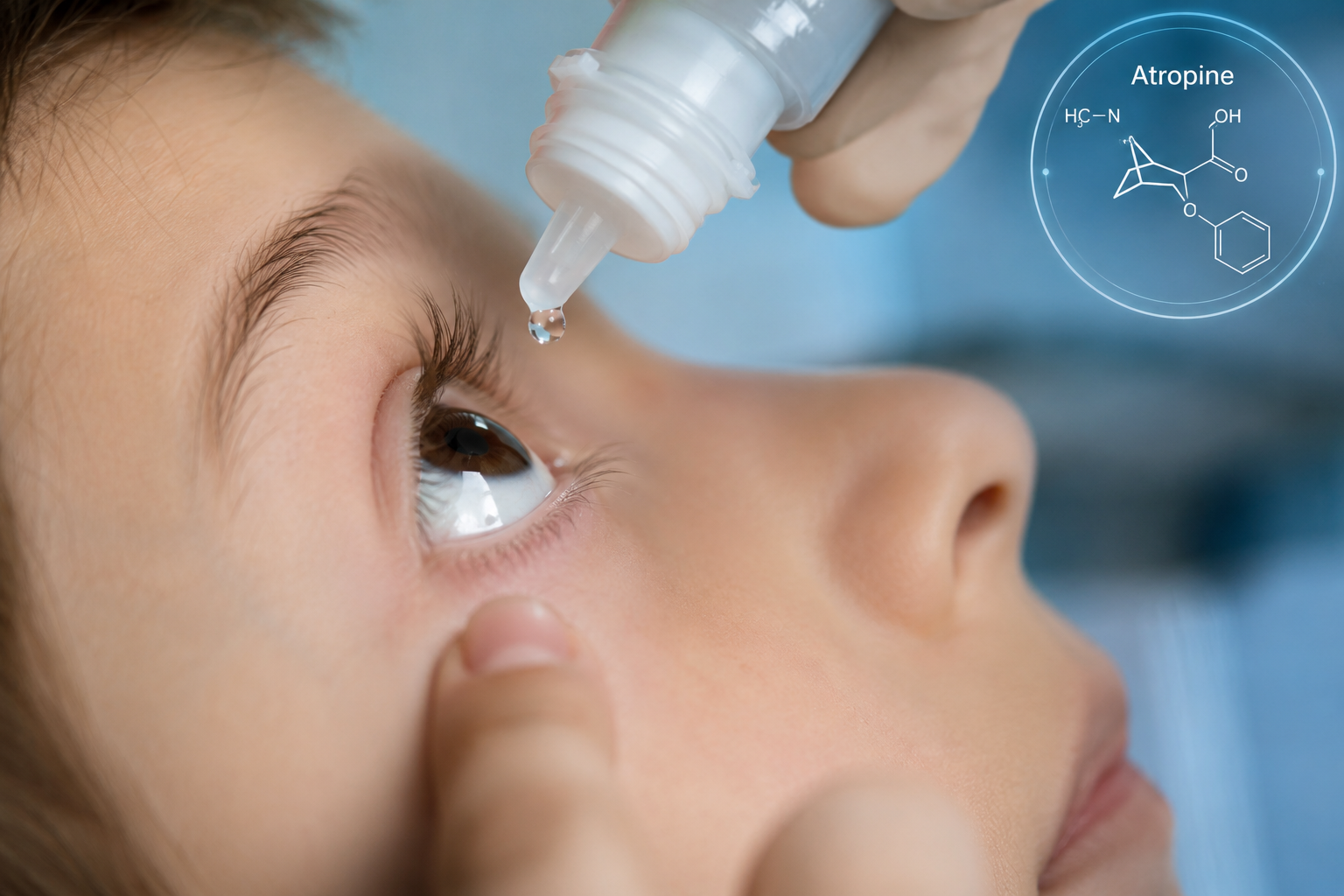
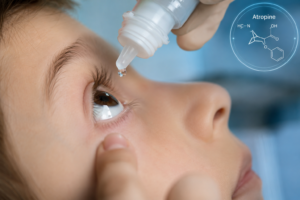
Applied as a single drop of Ryjunea in each eye before bedtime, low-dose Atropine works by relaxing the focusing mechanisms of the eye and altering the biochemical signals that cause the eyeball to stretch and elongate.

The “Independent Prescribing” Advantage & NHS Availability

While the MHRA has approved this treatment, the College of Optometrists has confirmed that Ryjunea low-dose Atropine for myopia management is not currently available on the NHS. It can only be accessed via a private prescription.

Furthermore, because Ryjunea is a prescription-only medication, it cannot be prescribed by a standard high-street optician.

This is where choosing an Independent Prescribing (IP) Optometrist becomes vital for your child’s care. As an IP-qualified specialist, I hold the advanced medical credentials required to directly write private prescriptions for these newly licensed Ryjunea drops. This ensures your child receives immediate access to the latest medical interventions right here in our Croydon practice.

A Comprehensive, Bespoke Approach to Myopia

Ryjunea is a game-changer, but it is not a “one-size-fits-all” solution. At The Eye Centre, we use Atropine in addition to our existing, clinically proven myopia management treatments.

Depending on your child’s specific prescription, lifestyle, and rate of progression, we may recommend using Ryjunea drops:

  • As a standalone treatment, paired with no spectacles or standard single-vision glasses for daytime wear.

  • As a combination therapy, used alongside specialist interventions like MiYOSMART/MiYOSMART IQ or Imperium spectacle lenses, MiSight soft daily lenses, or EyeDream MC Ortho-K lenses for a compounded, maximum-efficacy approach.

How We Track Success: Precision Axial Length Measurement

The primary goal of Ryjunea Atropine therapy is to stop the eyeball from physically stretching out of proportion. Standard eye tests—which simply check if the prescription has changed—are not accurate enough to monitor this medical treatment.

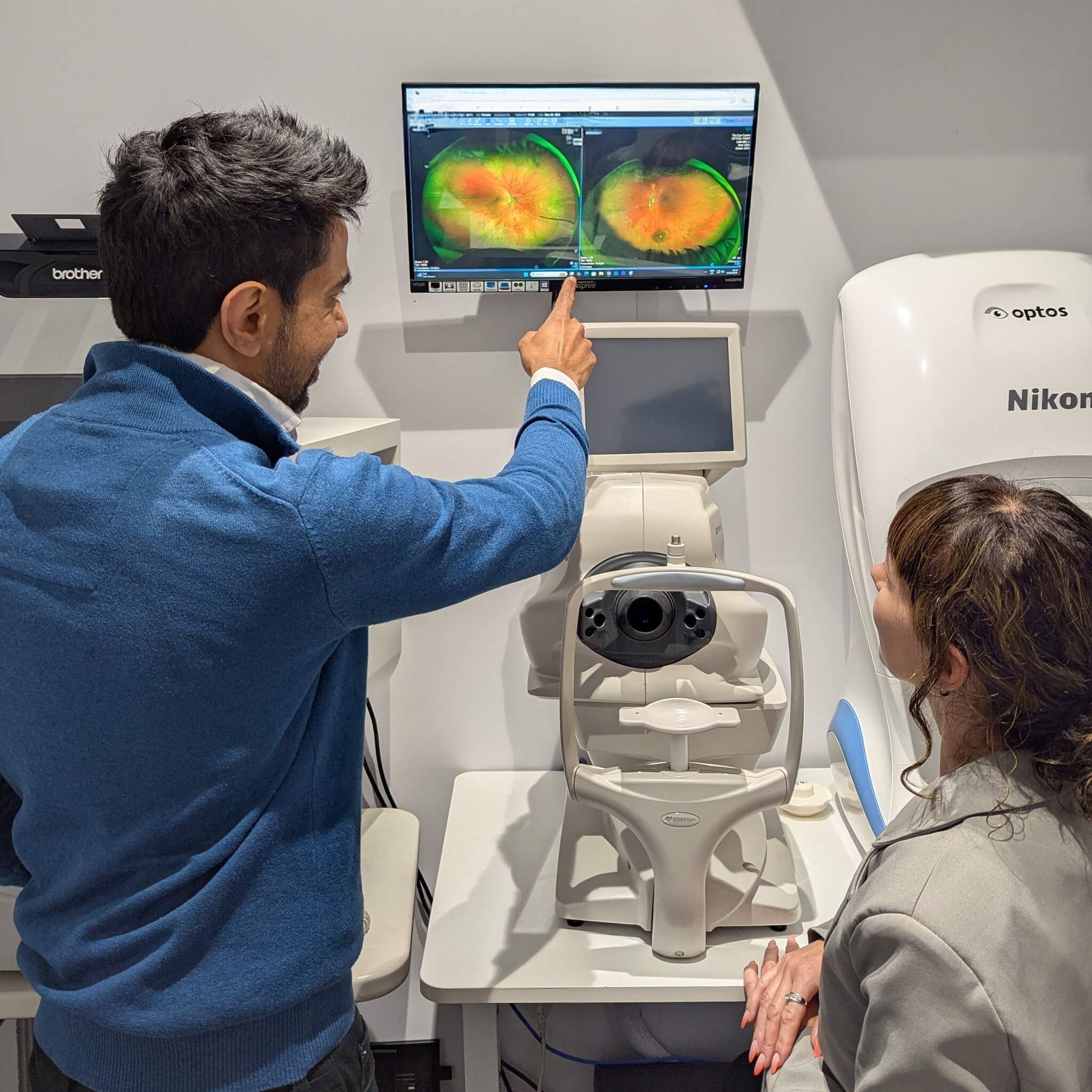
To guarantee the eye drops are working, we utilise our state-of-the-art Topcon Myah diagnostic instrument. As a mandatory part of our myopia management programme, we take pinpoint-accurate axial length measurements every 3 months.

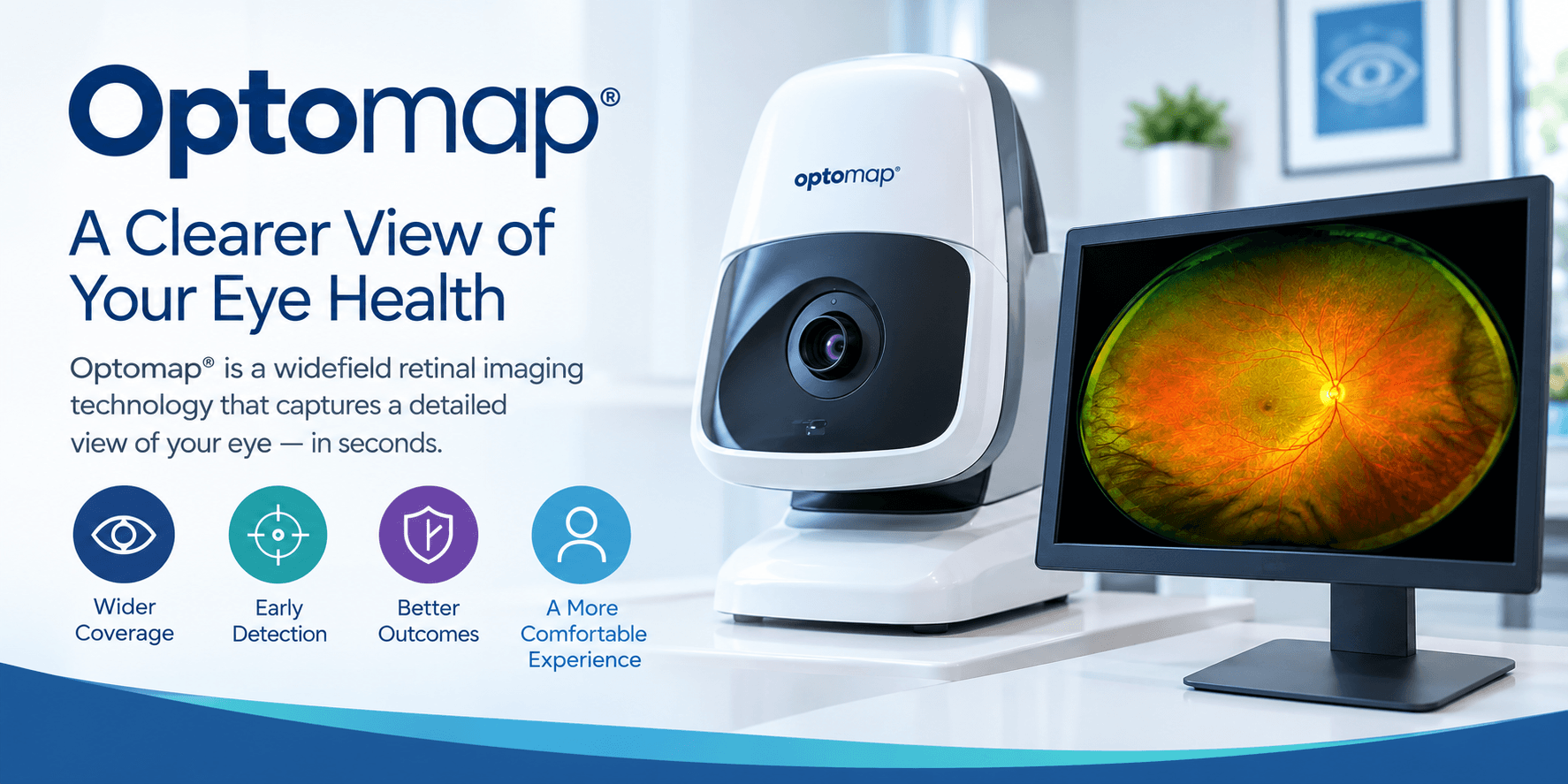
By continuously tracking the physical growth of the eye to a fraction of a millimetre, we can confirm the treatment’s success or proactively adjust your child’s clinical plan to ensure their vision remains protected. We also routinely perform Optomap Ultra-Widefield Imaging to monitor the delicate peripheral retina, ensuring absolute peace of mind.

Experience the Independent Difference

If you are actively looking for Atropine myopia treatment for your child, do not settle for standard refraction management. Book a Myopia management consultation at our Thornton Heath practice today to explore our comprehensive, medically led treatments.

Take Control of Your Child’s Vision

About the Author

Paras Kothari, MCOptom, Prof cert Glauc, DipTp(IP)

Paras is an Independent Prescribing Optometrist and the lead clinician at The Eye Centre. Specialising in Myopia Management, low-dose Atropine therapy, and advanced clinical care, he provides hospital-grade diagnostics and preventative treatments to patients across South London and Surrey.
By |2026-08-17T15:17:39+01:0017 August 2026|News|0 Comments

A New Era in Myopia Management: Introducing the MiYOSMART iQ Lens

0 minute read

News

At The Eye Centre in Thornton Heath, we are constantly upgrading our technology to provide hospital-grade clinical care. When managing childhood myopia, we know that standard refraction management isn’t enough; we need to proactively slow the physical growth of the eye.

That is why we are thrilled to introduce the newest advancement in preventative eye care: the MiYOSMART iQ spectacle lens from HOYA.

What is the MiYOSMART iQ Lens?

The MiYOSMART iQ is the newest version of HOYA's globally recognised myopia control spectacle lens. While the original MiYOSMART lens remains an excellent choice, this next-generation design has been engineered to deliver even more impressive clinical results.

In a recent clinical trial, the MiYOSMART iQ stopped clinically relevant myopia progression for 9 out of 10 children over their first year of wear. Furthermore, it has been reported to successfully control progression in children as young as four years of age.

How Does It Work? The Triple Enhanced Design (TED)

Like its predecessor, the MiYOSMART iQ looks just like a normal single-vision lens, but it utilizes Defocus Incorporated Multiple Segments (D.I.M.S.) technology. However, it refines this with a Triple Enhanced Design (TED) to maximize effectiveness:

  • Activated: The defocus segments have been moved closer to the geometric centre of the lens, reducing the central clear zone from 9.4mm to 6.9mm. This ensures the near-peripheral retina is continuously activated, which research shows is the region most responsive to myopia control signals.
  • Powerful: The defocus power has been increased from +3.50D to +4.50D. This delivers a stronger, more robust signal to slow the elongation of the eye.
  • Extended: The treatment zone has been expanded. This guarantees that a larger portion of your child's visual field receives the preventative signal, even when wearing larger spectacle frames.

Built for Active Children: The S.P.A.R.K. Coating

We know that children's glasses need to withstand the playground. The MiYOSMART iQ features a brand-new S.P.A.R.K. (Scratch resistant, Protection, Advanced technologies, Ready for Kids) coating.

  • It is up to 50% more scratch-resistant than the previous generation.
  • It repels water, smudges, and dust up to five times better, maintaining long-lasting cleanability.
  • It provides 100% UV protection from the front while actively reducing reflections and glare.

For kids who are always outdoors, we can also supply these lenses with Chameleon photochromic technology, automatically adapting to varying sunlight to offer constant UV protection. Plus, thanks to new FreeForm technology, the edges of the lenses can be reduced by up to 10%, giving a thinner, more aesthetically pleasing finish.

Our Advanced Clinical Approach

Dispensing a highly technical lens like the MiYOSMART iQ requires pinpoint accuracy. If the treatment zones are not perfectly aligned with your child's visual axis, the lens cannot do its job properly.

This is why our Myopia Management clinics in South London involve meticulous frame styling and hospital-grade diagnostics. Using our Topcon Myah machine, we precisely measure your child's axial length every three months. By tracking the physical growth of the eyeball, we can definitively confirm that the MiYOSMART iQ lenses are working. We also routinely conduct Optomap ultra-widefield imaging to check the stretched peripheral areas of the retina for any early signs of damage.

As an Independent Prescribing Optometrist, my priority is ensuring your child has access to the highest tier of medical eye care without the wait for a hospital referral.

Take Control of Your Child's Vision

Ready to explore the most advanced spectacle lens for childhood myopia? Book an MiyoSmart Initial Appointment at our Thornton Heath practice today to safeguard your child's visual future.

Book a Myopia Consultation

About the Author

Paras Kothari, MCOptom, Prof cert Glauc, DipTp(IP)

Paras is an Independent Prescribing Optometrist and the lead clinician at The Eye Centre. Specialising in Myopia Management, low-dose Atropine therapy, and advanced clinical care, he provides hospital-grade diagnostics and preventative treatments to patients across South London and Surrey.
By |2026-08-10T13:33:09+01:0010 August 2026|News|0 Comments

The True Measure of Myopia: Why Axial Length Matters More Than Your Prescription

0 minute read

News

When a child becomes short-sighted, the traditional high-street approach is to simply issue a stronger pair of glasses each year. We call this “refraction management.” But to truly protect your child’s future vision, we must move beyond the prescription and focus on the physical growth of the eye.

At The Eye Centre in Croydon, our approach to Myopia Management is fundamentally different from standard opticians. We focus on a critical measurement that dictates the long-term health of the eye: the axial length.

What is Axial Length?

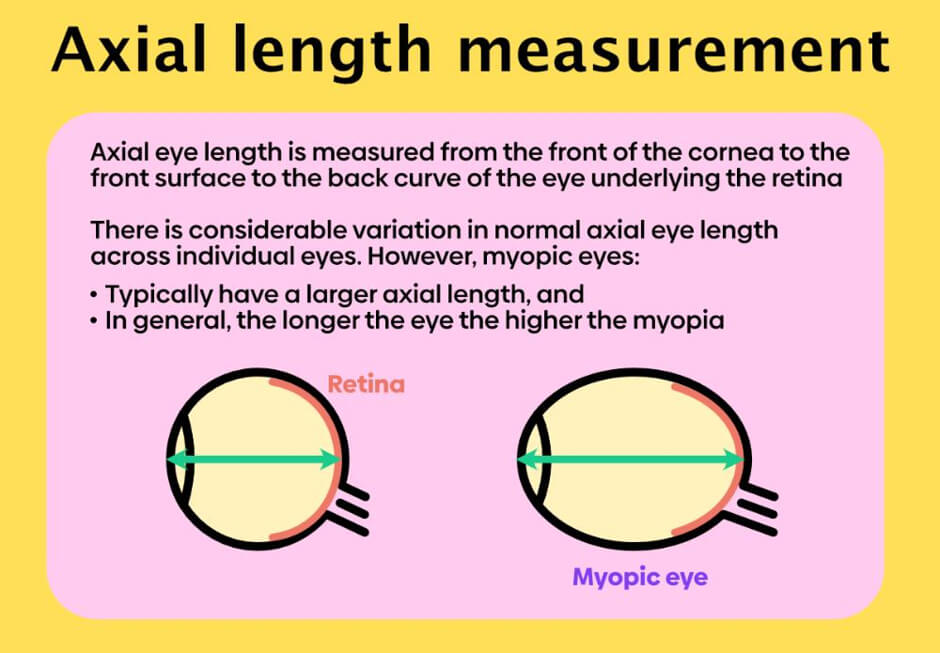
Put simply, axial eye length is the physical distance measured from the front of the cornea to the back curve of the eye, directly underlying the retina.

As a child grows, their eyes grow too. However, in myopic (short-sighted) children, the eye elongates too rapidly and stretches out of proportion. In general, the longer the eye grows, the higher the degree of myopia becomes.

The Danger Zone: Why We Must Keep Growth Under 26mm

There is considerable variation in normal axial eye length across individuals. A normal axial eye length sits between 23mm and 23.5mm (with males typically showing eyes about 0.5mm longer than females).

Clinical myopia tends to occur once the axial length extends over 24mm.

The primary goal of proactive Myopia Control is to slow down this physical eye growth as much as clinically possible. Specifically, our objective is to prevent the eye from reaching an axial length of 26mm. Once an eye elongates past the 26mm threshold, the delicate tissues at the back of the eye are stretched dangerously thin. This dramatically increases the risk of severe vision problems in adulthood, including myopic maculopathy and glaucoma.

Our Advanced Clinical Approach: The Topcon Myah

Because axial length is the truest indicator of myopia progression, we take precise axial length measurements as a mandatory part of our myopia management clinics—a level of Preventative Eye Care that most standard opticians do not provide.

To deliver this exceptional standard of care, we have heavily invested in the Topcon Myah—a state-of-the-art diagnostic instrument specifically designed for myopia management. This advanced technology allows us to capture highly accurate axial length measurements in a matter of seconds.

As part of our comprehensive myopia management programme, we measure your child's axial length every 3 months. Tracking this precise data allows us to definitively confirm whether the chosen treatment is successfully slowing the eye's growth, or if we need to proactively adjust their treatment plan to better protect their vision.

Furthermore, because elongating eyes are at a significantly higher risk for retinal damage, we routinely incorporate Optomap Ultra-Widefield Imaging into our assessments. While a standard eye test only sees a fraction of the back of the eye, our hospital-grade Optomap captures a 200-degree, high-resolution image of the retina. This allows us to meticulously check the stretched peripheral areas of myopic eyes for signs of retinal atrophy, subtle tears, or detachments.

Clinically Proven Treatment Options at The Eye Centre

Every child’s eyes are unique, which is why we offer a bespoke portfolio of interventions designed to slow axial elongation.

Specialist Spectacle Lenses For children who prefer glasses, we dispense highly advanced lenses that look just like normal spectacles but feature microscopic treatment zones to slow eye growth:

  • Miyosmart Spectacle Lenses: Featuring award-winning D.I.M.S. technology, these lenses simultaneously correct vision while casting a treatment signal to the peripheral retina to halt elongation.
  • Imperium Spectacle Lenses: Another brilliant, clinically proven lens design that manages myopia progression without compromising on visual clarity or cosmetic appearance.

Specialist Contact Lenses Contact lenses are fantastic for active children and provide a continuous treatment zone regardless of where the child looks:

  • MiSight Soft Contact Lenses: The world’s first daily disposable contact lens clinically proven to slow the progression of myopia in children.
  • Mylo Soft Contact Lenses: A highly breathable, monthly silicone hydrogel lens featuring Extended Depth of Focus (EDOF) technology, tailored specifically for myopia management.

Overnight Vision Correction

  • Orthokeratology (Ortho-K EyeDream MC Design): A remarkable, non-surgical alternative to laser eye surgery. Your child wears these custom-designed lenses only while they sleep. The lenses gently reshape the cornea overnight, meaning they wake up with perfect 20/20 vision and do not need to wear glasses or daytime contact lenses at all.

The Future of Myopia Control & Medical Eye Care

The field of myopia management is constantly evolving. Globally, pharmacological treatments like low-dose Atropine eye drops are showing incredible promise in slowing down axial growth.

This is where choosing an Independent Prescribing Optometrist becomes crucial for your child's care. Not all high-street opticians hold this advanced medical qualification. Because I am IP-qualified, I am licensed to write prescriptions for hospital-strength medications. Once pharmaceutical treatments like Atropine become fully licensed for myopia management in the UK, we will have the clinical authority to prescribe these medicines directly to your child right here in our Thornton Heath practice—ensuring they have immediate access to the latest medical interventions without waiting for hospital referrals.

Take Control of Your Child's Vision

Do not settle for refraction management. Book an Advanced Eye Examination at our Thornton Heath practice today to explore our clinically proven treatments and safeguard your child's visual future.

Ready to see the difference?

About the Author

Paras Kothari, MCOptom, Prof cert Glauc, DipTp(IP)

Paras is an Independent Prescribing Optometrist and the lead clinician at The Eye Centre. Specialising in Myopia Management, low-dose Atropine therapy, and advanced clinical care, he provides hospital-grade diagnostics and preventative treatments to patients across South London and Surrey.
By |2026-08-05T16:40:29+01:005 August 2026|News|0 Comments

The Independent Difference: Why Our Croydon Practice Puts Your Vision First

0 minute read

News

Booking an eye test or choosing glasses in South London? While big-name chains dominate the high street, many Croydon and Thornton Heath residents choose an independent optician like The Eye Centre.

The reason is simple: you are our patient, not a sales target.

1. Clinical Freedom: Your Health Comes First

Unlike large chains, our practitioners aren't bound by rigid corporate policies or daily sales quotas. Without a "head office" dictating our day, we have the freedom to recommend the best products and treatments for your specific needs, completely bias-free. If we suggest a lens or treatment, it’s because it’s genuinely the best option for your vision—not a corporate target.

2. Technology That’s Years Ahead

"Standard" lens designs in large chains are often years behind the latest optical innovations. By partnering with world-class independent laboratories, we offer spectacle lenses 3 to 5 years ahead of mass-market technology. This guarantees sharper vision, superior peripheral clarity, and a precise fit for your lifestyle.

3. Advanced Specialist Care in South London

We invest in hospital-grade technology for clinical peace of mind far beyond a standard eye test:

  • Optomap Ultra-Widefield Imaging: Captures up to 80% of your retina in one view, helping us check the extreme periphery for retinal tears or detachments often missed in traditional exams.
  • OCT 3D Scanning: Like an MRI for your eye, this looks beneath the retina's surface to detect conditions like glaucoma or macular degeneration years before they affect your sight.
  • Orthokeratology (Ortho-K): Wear custom contact lenses only while you sleep and wake up to clear, glasses-free vision all day—a fantastic non-surgical alternative to laser eye surgery.
  • Myopia Management: As a leading Croydon center for myopia control, we use specialized axial length scans and treatments like Ortho-K to actively slow the progression of short-sightedness in children.
  • Keratoconic Lens Fitting: Specialist contact lens fittings for complex corneal conditions, requiring expertise rarely found on the high street.

4. Continuity and Community

Tired of explaining your history to a different optician every visit? At The Eye Centre, you get continuity. We get to know your eyes, your family, and your lifestyle. We’re more than a business; we’re your neighbors, deeply rooted in the Thornton Heath and South London community.

Experience the Independent Difference

Whether you want the peace of mind of an Optomap scan, the freedom of Ortho-K lenses, or to browse our hand-picked frames, our doors are open.

Ready to see the difference?

About the Author

Paras Kothari, MCOptom, Prof cert Glauc, DipTp(IP)

Paras is an Independent Prescribing Optometrist and the lead clinician at The Eye Centre. Specialising in Myopia Management, low-dose Atropine therapy, and advanced clinical care, he provides hospital-grade diagnostics and preventative treatments to patients across South London and Surrey.
By |2026-06-22T16:08:43+01:0029 May 2026|News|0 Comments
Go to Top